Run #773
done
rubric v1
session 79372233
gemini-3.7-flash
2026-09-21 02:21
Review team
no_issue
Product AI
nothing found
teaching Yes · mistakes No · satisfactory Yes
Each verdict takes your own. Yours is stored against the stack's, so “where is it wrong most often” is a question with an answer.
-
seen · 95% confidentWork is the right way up The paper and writing are presented upside down (180 degrees rotated).In Frames 2 through 9, the tutor writes upside down relative to the camera view, making the text and diagrams inverted (upright at 180 degrees).
-
Your view
-
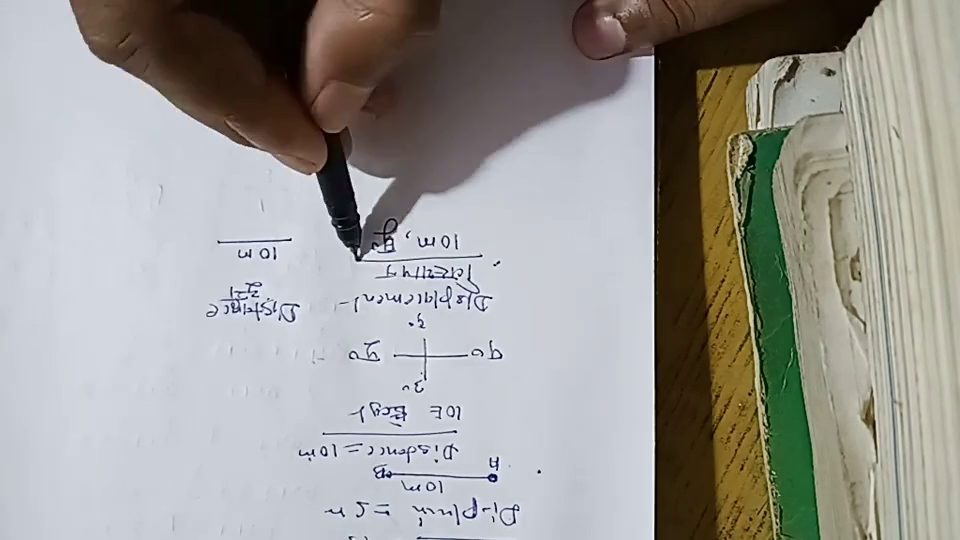
seen · 90% confidentWriting is legible at video size Handwriting and diagrams are clear and legible.Text such as 'Distance', 'Displacement', numerical values (5m, 10m), and directional markings are clearly readable across Frames 3, 7, 8, and 9.
-
Your view
-
seen · 85% confidentThe work fills the frame A large portion of the right side is occupied by a stack of books.In Frames 2 to 9, the right third of the frame is blocked by a thick stack of books with red and white tape, though the writing area remains visible on the left.
-
Your view
-
seen · 90% confidentNothing distracting in shot A stack of bound books is visible alongside the workspace.Frames 2 to 9 clearly show a prominent stack of books bordering the white sheet of paper on the right.
-
Your view
-
seen · 95% confidentThe student's problem is established The tutor clearly states the question near the beginning.In the transcript at the start, the tutor states: 'Question आपका है कि state with a distance is a scalar or vector quantity, है न?'
-
Your view
-
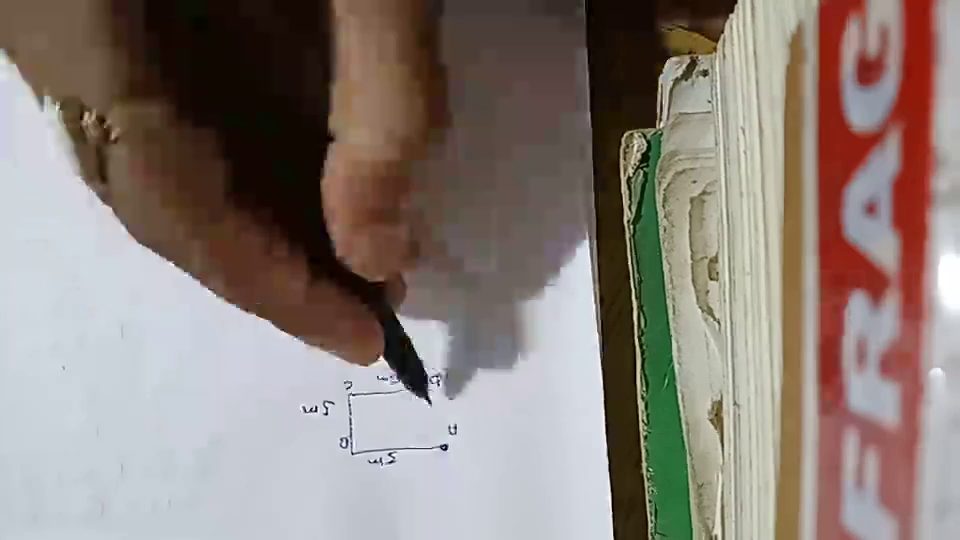
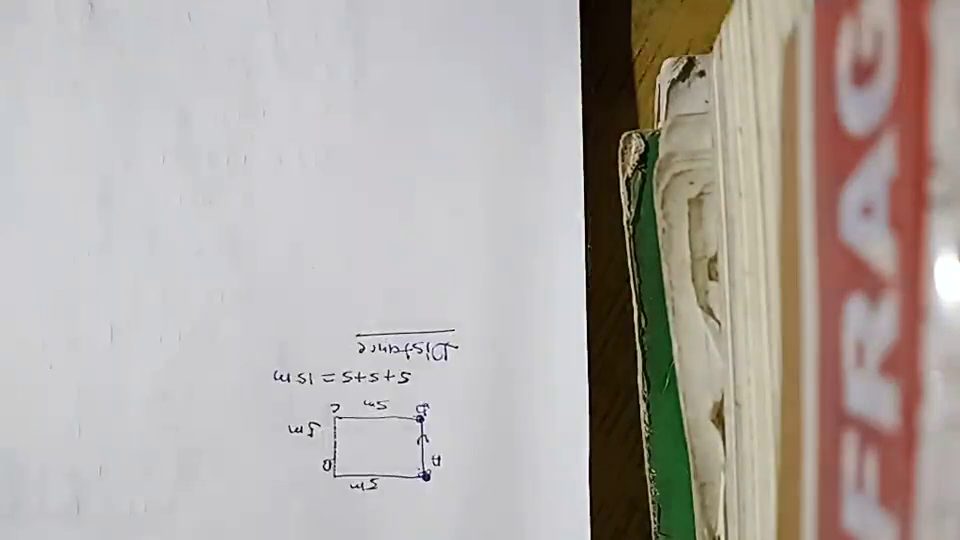
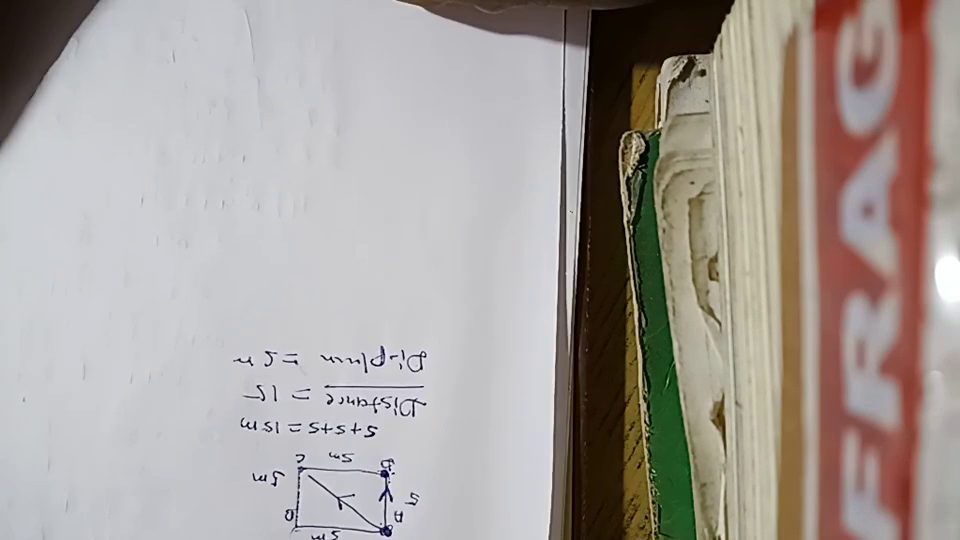
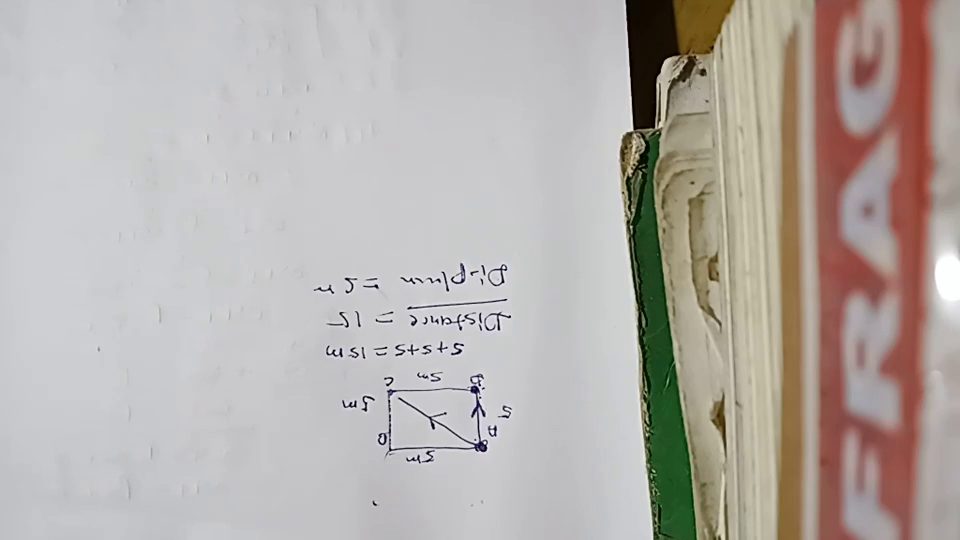
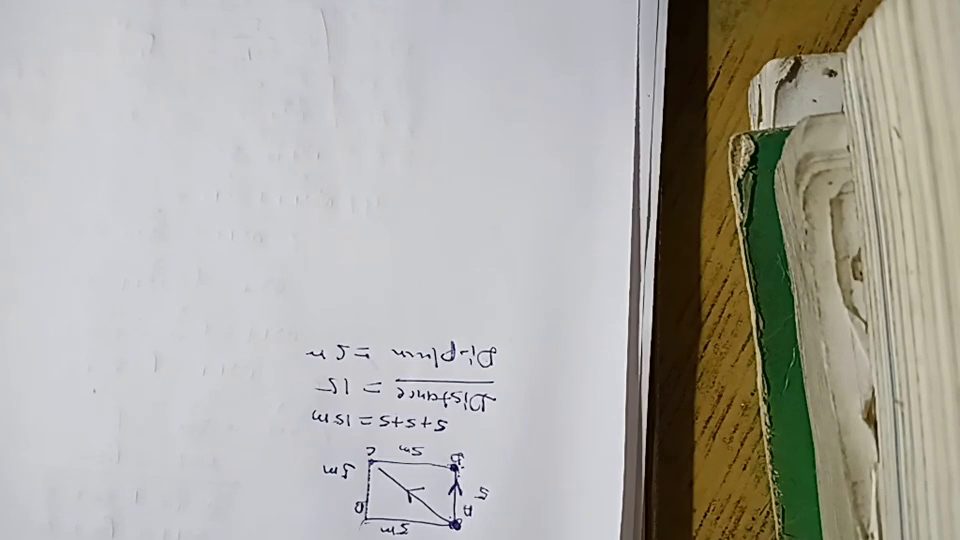
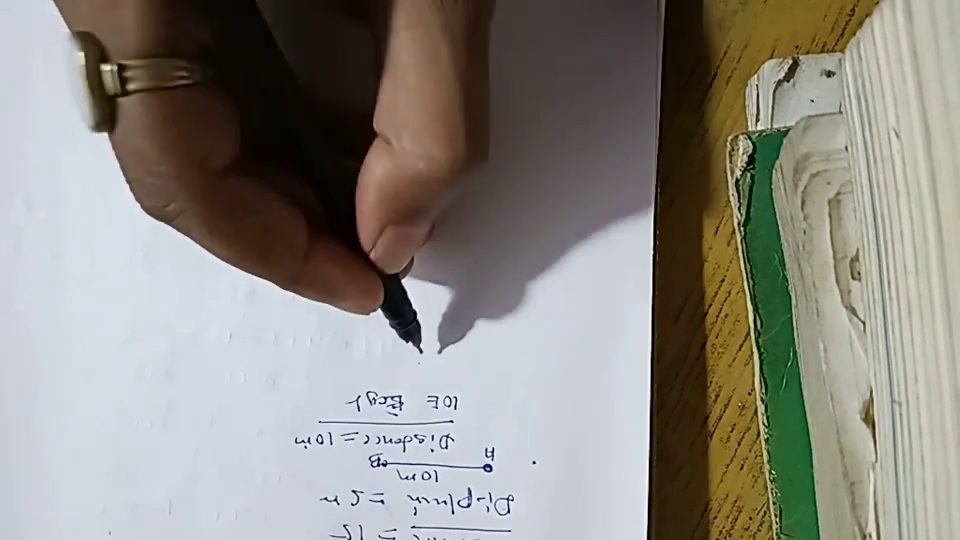
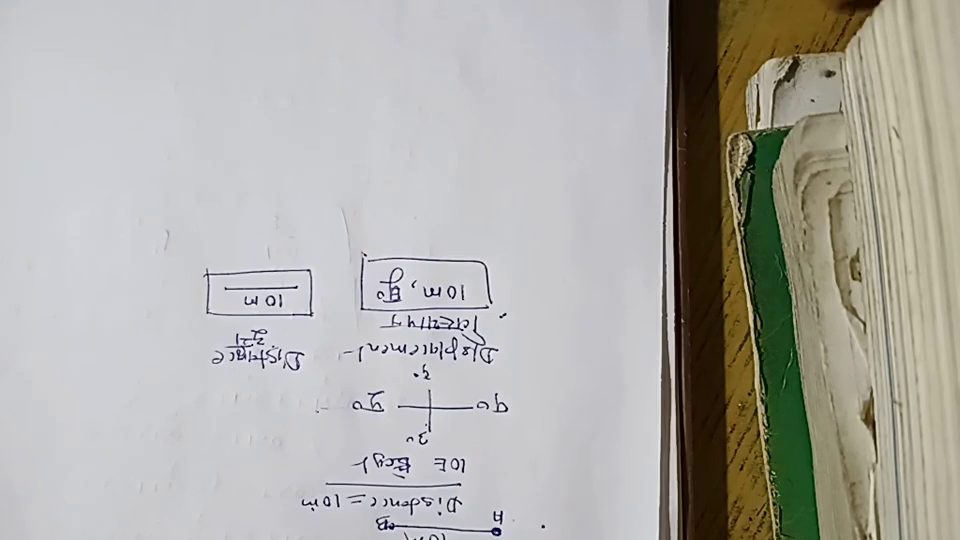
seen · 90% confidentWork proceeds in followable steps Work develops progressively through visual examples.Frames 2-6 build an example on a square path, while Frames 7-9 introduce a linear path with directions, boxed conclusions, and coordinate axes.
-
Your view
-
seen · 90% confidentIt reaches an answer The tutor completes the explanation with boxed final answers.Frame 9 shows the completed examples with boxed values for distance and displacement along with direction, after which the tutor wraps up.
-
Your view
-
measuredSomething was actually written Not applicable to a camera session
-
heard · 95% confidentThe concept is named before the working The concept of distance as a scalar/vector quantity is named upfront.Tutor explicitly mentions: 'Question आपका है कि state with a distance is a scalar or vector quantity, है न?' and explains 'distance is a scalar quantity'.
-
Your view
-
heard · 90% confidentExplained rather than jumped to the answer The tutor sets up the concept using illustrative examples.Right after stating the question, the tutor draws illustrative motion paths (Frames 2-6) to define initial and final positions before reaching the scalar/vector distinction.
-
Your view
-
heard · 90% confidentSolved step by step, not in one leap Concepts and solutions are explained in clear steps with diagrams.Frames 2-9 show the tutor progressively diagramming distance vs. displacement paths and linking direction to displacement step-by-step.
-
Your view
-
heard · 95% confidentThe session opens properly The tutor greets the student and confirms the question before starting.The transcript starts with: 'Hello Saurabh, good evening... Question आपका है कि state with a distance is a scalar or vector quantity, है न?'
-
Your view
-
measuredNo long dead air 1 gaps over 6.0s, 10s total (2% of the session), longest 10sSilence is below -35.0dB — a crude measure on a phone microphone, so treat a low count as weak evidence rather than proof the tutor was talking.
-
Your view
Observations judged, but not counted as the lab objecting
-
measuredThe camera holds still picture moves 27.5 on average between keyframes, 0.6 hard jumps/minConsistent with the camera being handheld — a stand would remove this entirely. A handheld phone measured 35.1. No steady-camera session has been measured yet, so the lower band is a guess.Not counted: Measured over 183 known-bad and 29 known-good camera sessions (2026-09-21): raised on 87% of the bad and 86% of the good, and the motion distributions are the same shape — median frame difference 25 on the bad set, 27 on the good. No threshold on this number separates them, so it is reported and not counted.
-
Your view
-
measuredExposure is usable average brightness 168.6, 7.3% of frame very dark, 10.2% blown outBlown-out share is reported but not judged: the subject is white paper, so a good session measures 11-24% there too.Not counted: Same two sets: it raised 6 of 183 known-bad and 2 of 29 known-good sessions. Both too few to mean anything, and the brightness distributions overlap almost exactly. The earlier reading that it 'fires more on clean sessions' was two sessions out of twenty-nine — noise, not an inverted rule.
-
Your view
-
heardUnderstanding of the concept is checked Checks are primarily procedural or confirmation checks.The tutor asks 'What do you understand?' and 'North, South, East, West यही होता है ना' in the transcript, but mostly relies on 'Did you understand?' without deep conceptual probing.Not counted: Raised on 87% of known-bad and 80% of known-good sessions. The criterion is honest about why in its own `why`: the transcript has no speaker labels, so a real check and a rhetorical 'ok?' are often indistinguishable, and the bar ends up one almost no session clears. Still judged and shown, because reading it beside a recording is how it gets better.
-
Your view
Frames in order, one every ~62s