Two.Sigma

← Review lab

Run #768

done rubric v1 session 79681342 gemini-3.7-flash 2026-09-21 02:21
Session in Sessions →

The recording

What the student sent the question as it arrived, then each reading of it

Typed by the student

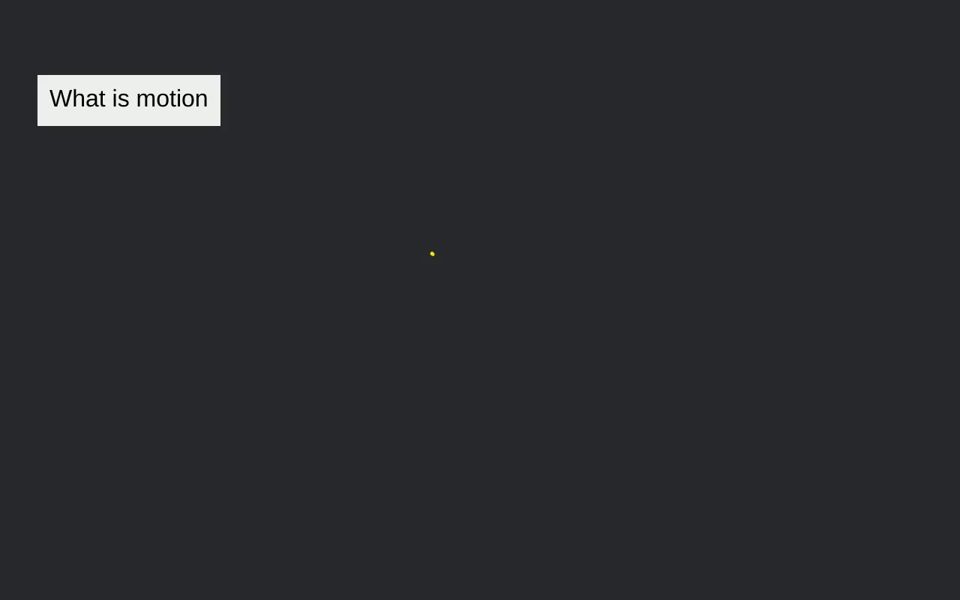
What is motion

The audit's reading of the question, which is what the Product AI judged against:

What is motion

Audit's summary: The student asks "What is motion?" The tutor explains that motion occurs when an object changes its position with respect to time. The tutor also introduces the concepts of rest, rectilinear motion, and curvilinear motion, using examples like a car on a straight road. The explanation is delivered in a mix of Hindi and English.

Transcript 1,167 characters · 102 stripped

Read it no speaker labels — tutor and student run together

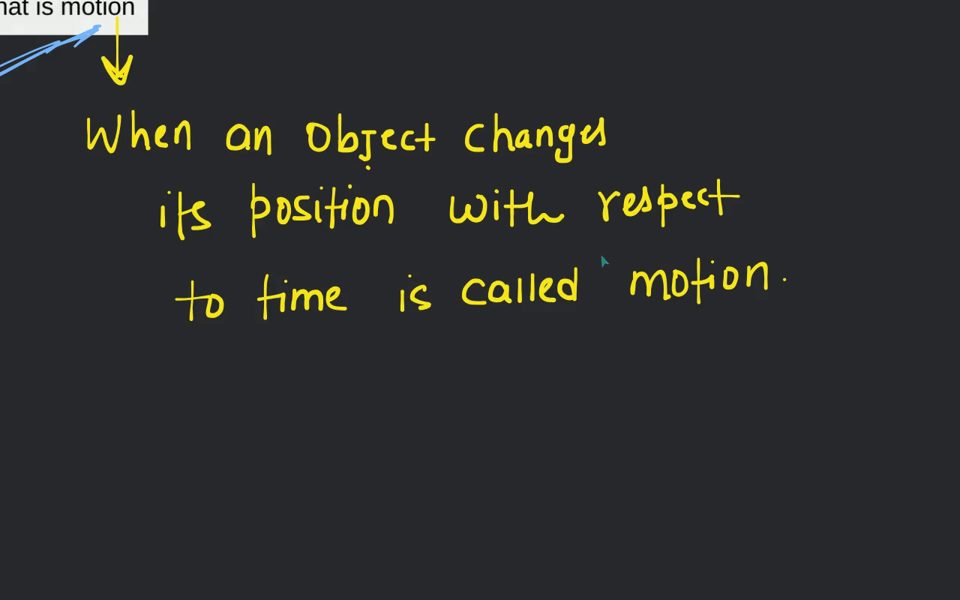
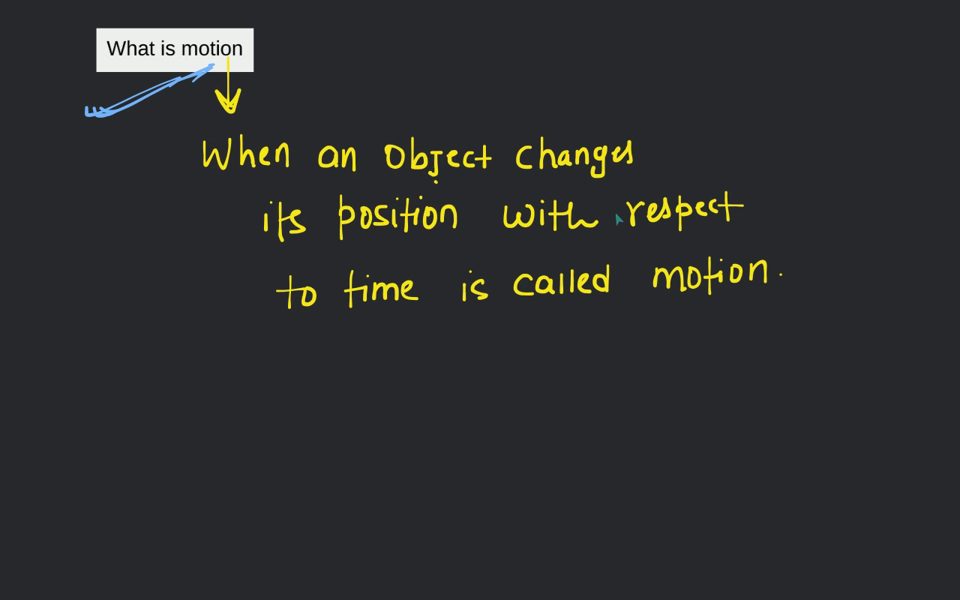
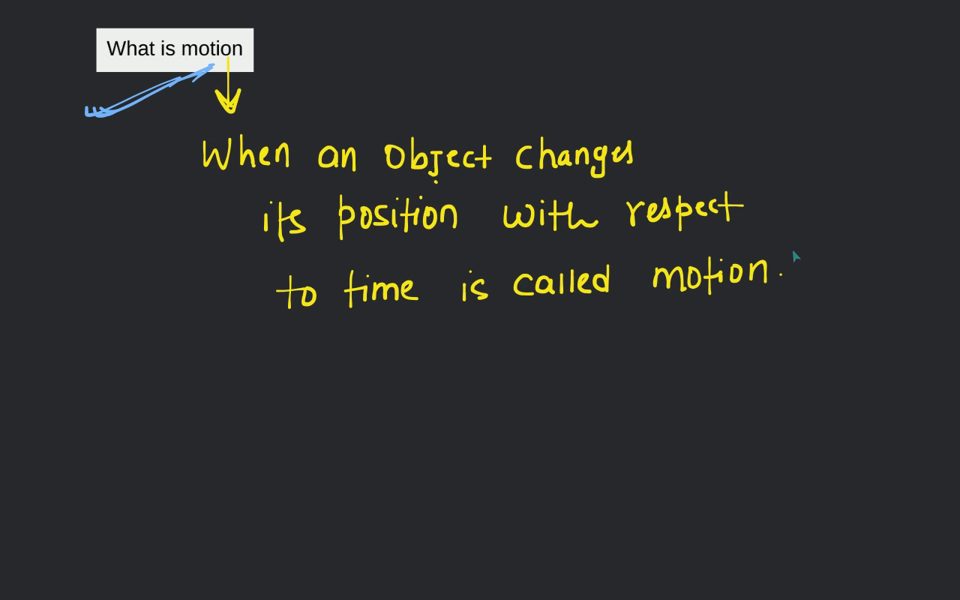
Good afternoon. Yes, good afternoon. What is motion? So, motion is when an object changes its position. Means, if an object changes its position according to time, then what is it called? It is called motion in motion. When an object with respect to time is called motion. This is called motion. This is called motion. गति बोलते हैं जब कोई वस्तु अपनी अवस्था में परिवर्तन लाता है समय के इसाप से अपनी वस्ता में परिवर्तन लाता है तो क्या बोलते हैं उसको बड़े सेट बेन मोशन में होगा ठीक है In the 9th class, you will understand what is rest. What is rest? When an object does not change its position with respect to time. We call it rest. When is any object in rest? We will say that the object is in the same place. With respect to time, its movement is not changing. Now we also study motion in many ways. If we talk about it in simple terms, one is rectilinear motion and the other is curvilinear motion. Rectilinear means any object is moving in a straight line. Like the motion of a car on a straight road. If there is a straight road and a car is moving on it, then what will happen? It will be rectilinear motion. What will be curvilinear motion? It is a curved path.

What the student sent the question as it arrived, then each reading of it

Typed by the student

What is motion

The audit's reading of the question, which is what the Product AI judged against:

What is motion

Audit's summary: The student asks "What is motion?" The tutor explains that motion occurs when an object changes its position with respect to time. The tutor also introduces the concepts of rest, rectilinear motion, and curvilinear motion, using examples like a car on a straight road. The explanation is delivered in a mix of Hindi and English.

Transcript 1,167 characters · 102 stripped

Read it no speaker labels — tutor and student run together

Good afternoon. Yes, good afternoon. What is motion? So, motion is when an object changes its position. Means, if an object changes its position according to time, then what is it called? It is called motion in motion. When an object with respect to time is called motion. This is called motion. This is called motion. गति बोलते हैं जब कोई वस्तु अपनी अवस्था में परिवर्तन लाता है समय के इसाप से अपनी वस्ता में परिवर्तन लाता है तो क्या बोलते हैं उसको बड़े सेट बेन मोशन में होगा ठीक है In the 9th class, you will understand what is rest. What is rest? When an object does not change its position with respect to time. We call it rest. When is any object in rest? We will say that the object is in the same place. With respect to time, its movement is not changing. Now we also study motion in many ways. If we talk about it in simple terms, one is rectilinear motion and the other is curvilinear motion. Rectilinear means any object is moving in a straight line. Like the motion of a car on a straight road. If there is a straight road and a car is moving on it, then what will happen? It will be rectilinear motion. What will be curvilinear motion? It is a curved path.

Review team

no_issue

Product AI

nothing found

teaching Yes · mistakes No · satisfactory Yes

Each verdict takes your own. Yours is stored against the stack's, so “where is it wrong most often” is a question with an answer.

  1. Work is the right way up Board orientation is upright at 0 degrees
    Text is oriented horizontally and upright in all frames (Frames 1-9).
    seen · 100% confident
  2. Your view
  3. Writing is legible at video size Text and handwriting are clearly legible
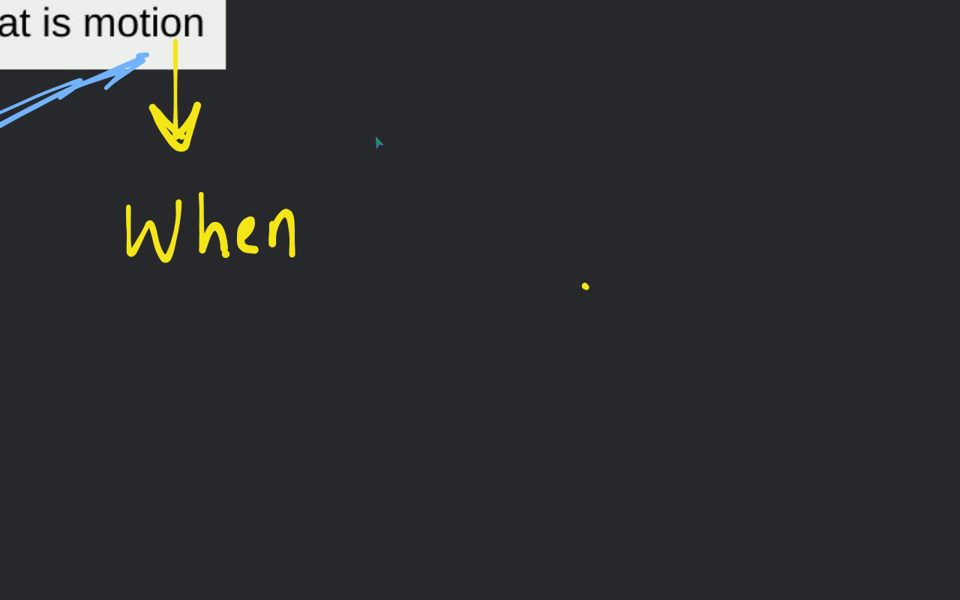
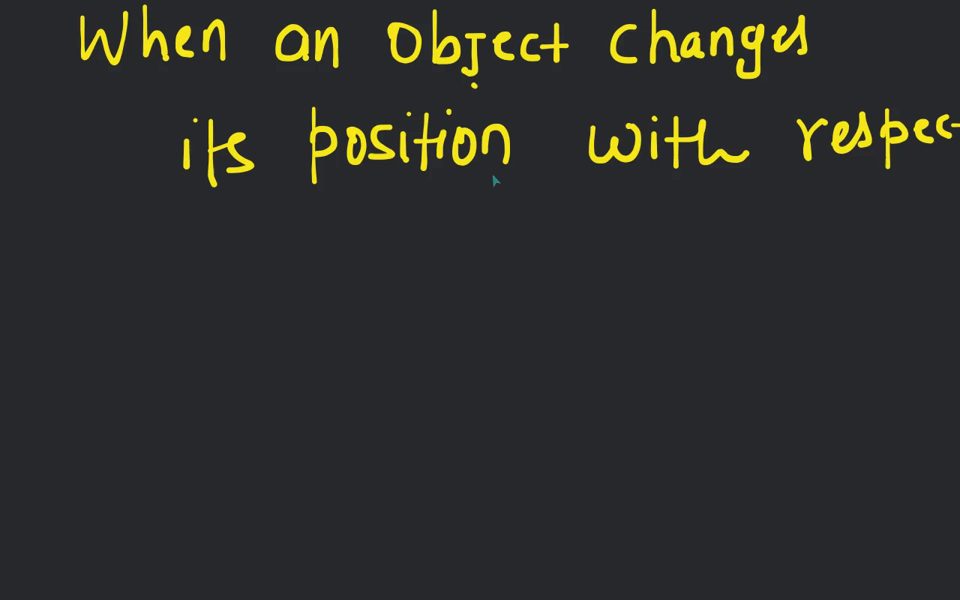
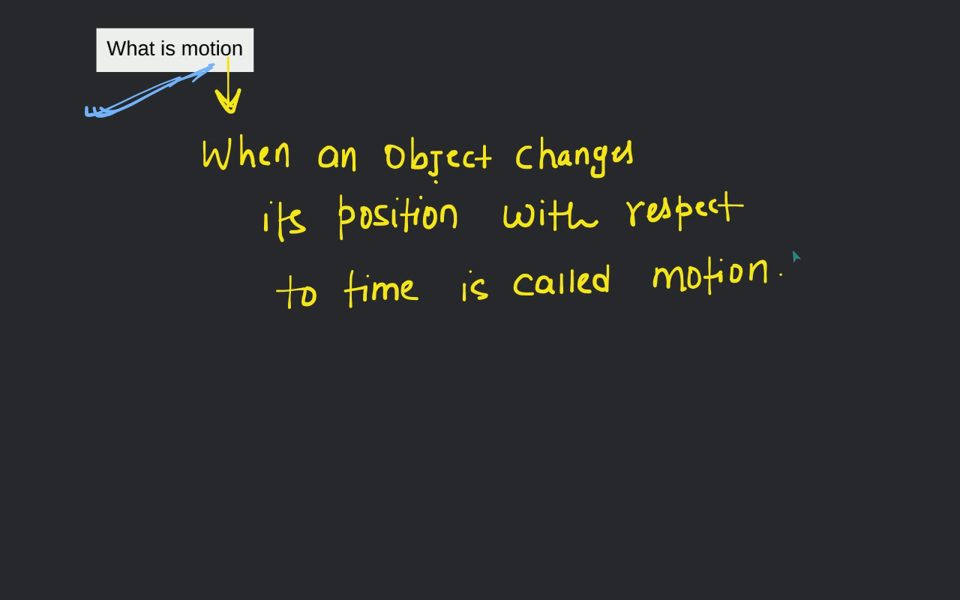
    Handwritten definition 'When an object changes its position with respect to time is called motion.' is neat, well-spaced, and easy to read (Frames 4-8).
    seen · 100% confident
  4. Your view
  5. The work fills the frame Not applicable to a board session
    seen
  6. Nothing distracting in shot Not applicable to a board session
    seen
  7. The student's problem is established Question is captured at the start of the session
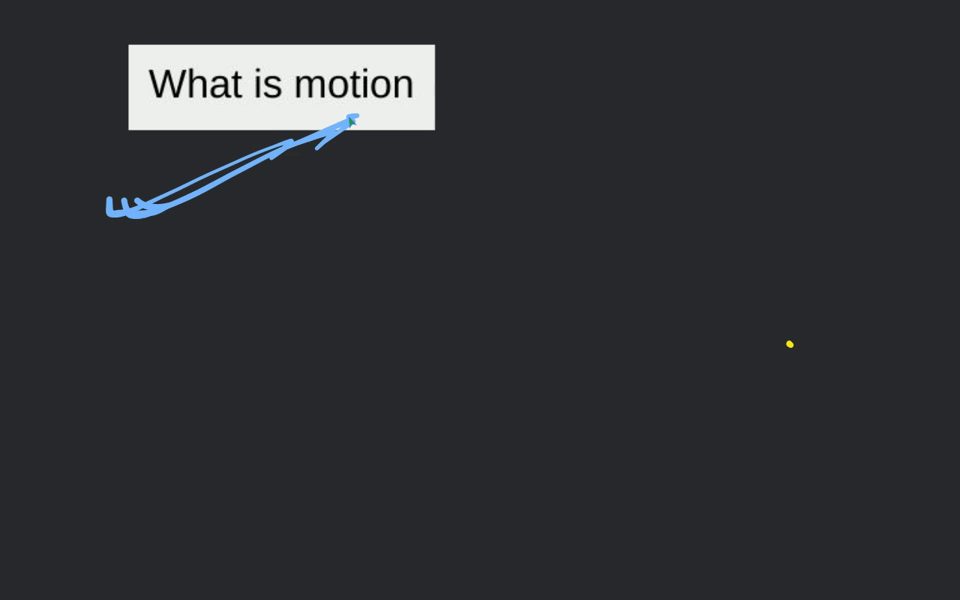
    The question 'What is motion' is shown as a text box in the upper left corner from Frame 1 onward.
    seen · 100% confident
  8. Your view
  9. Work proceeds in followable steps Board work accumulates clearly
    The definition accumulates sequentially across Frames 3 to 5 and remains clearly displayed on the canvas.
    seen · 100% confident
  10. Your view
  11. It reaches an answer Conceptual explanation is fully answered
    The complete definition is written out by Frame 5 and elaborated with motion types through the end of the session.
    seen · 100% confident
  12. Your view
  13. Something was actually written board went from 1.65% to a peak of 5.24% covered (+3.59 points), ending at 2.32%
    Very little appeared on the board.
    measured
  14. Your view
  15. The concept is named before the working Tutor explicitly names the concept
    The tutor states: 'What is motion? So, motion is when an object changes its position.'
    heard · 100% confident
  16. Your view
  17. Explained rather than jumped to the answer Concept is explained thoroughly throughout
    As this is a purely conceptual question, the tutor explains the definition and contrasts it with rest and types of motion.
    heard · 95% confident
  18. Your view
  19. Solved step by step, not in one leap Spoken explanation develops logically
    The tutor logically progresses from the definition of motion to rest, rectilinear motion, and curvilinear motion.
    heard · 95% confident
  20. Your view
  21. The session opens properly Tutor greets and states the question
    The tutor exchanges greetings ('Good afternoon. Yes, good afternoon.') and confirms the topic ('What is motion?') at the beginning.
    heard · 100% confident
  22. Your view
  23. No long dead air 5 gaps over 6.0s, 66s total (36% of the session), longest 19s
    Silence is below -35.0dB — a crude measure on a phone microphone, so treat a low count as weak evidence rather than proof the tutor was talking.
    measured
  24. Your view
Observations judged, but not counted as the lab objecting
  1. The camera holds still Not applicable to a board session
    Not counted: Measured over 183 known-bad and 29 known-good camera sessions (2026-09-21): raised on 87% of the bad and 86% of the good, and the motion distributions are the same shape — median frame difference 25 on the bad set, 27 on the good. No threshold on this number separates them, so it is reported and not counted.
    measured
  2. Exposure is usable Not applicable to a board session
    Not counted: Same two sets: it raised 6 of 183 known-bad and 2 of 29 known-good sessions. Both too few to mean anything, and the brightness distributions overlap almost exactly. The earlier reading that it 'fires more on clean sessions' was two sessions out of twenty-nine — noise, not an inverted rule.
    measured
  3. Understanding of the concept is checked Tutor asks rhetorical questions and answers them immediately
    The tutor asks 'What is rest?' and 'What will be curvilinear motion?' but answers them immediately without pausing to let the student respond.
    Not counted: Raised on 87% of known-bad and 80% of known-good sessions. The criterion is honest about why in its own `why`: the transcript has no speaker labels, so a real check and a rhetorical 'ok?' are often indistinguishable, and the bar ends up one almost no session clears. Still judged and shown, because reading it beside a recording is how it gets better.
    heard
  4. Your view

Measured

Duration180s (3.0 min)
Video1280×800 @ 10.0fps
Audio trackyes
Shot changes
Dead air5 gaps ≥6.0s · 65.5s total · longest 19.0s
Lumaavg 45.1 · min · max
Mediumboard 94.8% flat background
Content written1.65% → 2.32% (+3.59)
Transcript 1167 characters of speech
Frames9

What the model returned verbatim

{
  "findings": [
    {
      "key": "orientation",
      "verdict": "ok",
      "headline": "Board orientation is upright at 0 degrees",
      "evidence": "Text is oriented horizontally and upright in all frames (Frames 1-9).",
      "confidence": 1.0
    },
    {
      "key": "legibility",
      "verdict": "ok",
      "headline": "Text and handwriting are clearly legible",
      "evidence": "Handwritten definition 'When an object changes its position with respect to time is called motion.' is neat, well-spaced, and easy to read (Frames 4-8).",
      "confidence": 1.0
    },
    {
      "key": "question_captured",
      "verdict": "ok",
      "headline": "Question is captured at the start of the session",
      "evidence": "The question 'What is motion' is shown as a text box in the upper left corner from Frame 1 onward.",
      "confidence": 1.0
    },
    {
      "key": "structure",
      "verdict": "ok",
      "headline": "Board work accumulates clearly",
      "evidence": "The definition accumulates sequentially across Frames 3 to 5 and remains clearly displayed on the canvas.",
      "confidence": 1.0
    },
    {
      "key": "completion",
      "verdict": "ok",
      "headline": "Conceptual explanation is fully answered",
      "evidence": "The complete definition is written out by Frame 5 and elaborated with motion types through the end of the session.",
      "confidence": 1.0
    },
    {
      "key": "concept_named",
      "verdict": "ok",
      "headline": "Tutor explicitly names the concept",
      "evidence": "The tutor states: 'What is motion? So, motion is when an object changes its position.'",
      "confidence": 1.0
    },
    {
      "key": "explained_before_solving",
      "verdict": "ok",
      "headline": "Concept is explained thoroughly throughout",
      "evidence": "As this is a purely conceptual question, the tutor explains the definition and contrasts it with rest and types of motion.",
      "confidence": 0.95
    },
    {
      "key": "concept_checked",
      "verdict": "bad",
      "headline": "Tutor asks rhetorical questions and answers them immediately",
      "evidence": "The tutor asks 'What is rest?' and 'What will be curvilinear motion?' but answers them immediately without pausing to let the student respond.",
      "confidence": 0.95
    },
    {
      "key": "step_by_step",
      "verdict": "ok",
      "headline": "Spoken explanation develops logically",
      "evidence": "The tutor logically progresses from the definition of motion to rest, rectilinear motion, and curvilinear motion.",
      "confidence": 0.95
    },
    {
      "key": "opening",
      "verdict": "ok",
      "headline": "Tutor greets and states the question",
      "evidence": "The tutor exchanges greetings ('Good afternoon. Yes, good afternoon.') and confirms the topic ('What is motion?') at the beginning.",
      "confidence": 1.0
    }
  ]
}

Frames in order, one every ~20s
frame 1
1
frame 2
2
frame 3
3
frame 4
4
frame 5
5
frame 6
6
frame 7
7
frame 8
8
frame 9
9